
Health & nutrition
Why organic, fresh mushrooms are good for your whole family
Mushrooms are low in calories and fat, have no cholesterol, and give useful B-vitamins and minerals. Here is what is inside — explained simply, with comparisons to everyday foods and links to the science.
In everyday terms
What 100 g of mushrooms (half a packet) gives you
Compared using official USDA food data for raw mushrooms, banana, milk, apple and cooked rice.
🍄 Oyster mushroom · 100 g
- 🍌Potassium of 1 medium banana420 mg — helps the heart, muscles and normal blood pressure
- 🍎Fibre of 1 small apple2.3 g — good for digestion and keeps you full longer
- 🥛Vitamin B2 of almost 1 glass of milk0.35 mg — about 27% of an adult's daily need
- ⚡About 1/3 of a day's vitamin B3 (niacin)5 mg — helps turn food into energy
- 🍚Only 33 caloriesAbout 1/4 of the calories in the same amount of cooked rice
Full nutrition table
Per 100 g of raw mushrooms
Source: USDA FoodData Central (Oyster: FDC 168580 · Button/white: FDC 169251). "% daily need" uses standard adult Daily Values.
| Nutrient | 🍄 Oyster | ⚪ Button | What it does for you |
|---|---|---|---|
| Calories | 33 kcal | 22 kcal | Very light — good for weight control |
| Protein | 3.3 g 7% | 3.1 g 6% | Builds and repairs muscles |
| Carbohydrates | 6.1 g | 3.3 g | Low in carbohydrates |
| Fibre | 2.3 g 8% | 1.0 g 4% | Helps digestion, keeps you full |
| Fat · Cholesterol | 0.4 g · 0 | 0.3 g · 0 | Almost no fat, no cholesterol |
| Vitamin B2 (riboflavin) | 0.35 mg 27% | 0.40 mg 31% | Energy, healthy skin and eyes |
| Vitamin B3 (niacin) | 5.0 mg 31% | 3.6 mg 23% | Turns food into energy |
| Vitamin B5 (pantothenic acid) | 1.3 mg 26% | 1.5 mg 30% | Energy and hormone making |
| Folate (B9) | 38 µg 10% | 17 µg 4% | Making new cells; important in pregnancy |
| Copper | 0.24 mg 27% | 0.32 mg 35% | Helps use iron and make red blood cells |
| Selenium | 2.6 µg 5% | 9.3 µg 17% | Protects cells; supports the thyroid |
| Potassium | 420 mg 9% | 318 mg 7% | Heart, muscles and blood pressure |
| Phosphorus | 120 mg 10% | 86 mg 7% | Strong bones and teeth |
| Iron | 1.3 mg 7% | 0.5 mg 3% | Carries oxygen in the blood |
| Zinc | 0.8 mg 7% | 0.5 mg 5% | Immunity and growth |
| Vitamin D | 0.7 µg 3% | 0.2 µg 1% | Bones — goes up a lot with sunlight |
Values are averages for raw mushrooms and can vary with growing conditions. Cooking removes water, so 100 g of cooked mushrooms has more of each nutrient by weight.
For the whole family
Good for children and adults
👧 For children
- Soft and easy to chew when cooked — easy to mix into dosa filling, sambar, pulao or pasta.
- Gives B-vitamins that help the body use food for energy.
- No cholesterol and very little fat.
- Children need smaller amounts of most nutrients, so even a small portion makes a useful contribution.
- Safety: always cook well. Cut small for young children. For babies under 1 year, ask your paediatrician first.
🧑 For adults & elders
- Very low in calories and carbohydrates — fills the plate without adding much to your weight.
- Potassium supports the heart and normal blood pressure.
- Rich, "meaty" taste — a satisfying way for vegetarians to enjoy more variety, or to replace some meat.
- Natural antioxidants: research from Penn State found mushrooms are among the richest food sources of ergothioneine and glutathione.
- Oyster mushrooms contain fibres called beta-glucans that scientists are studying for immunity and cholesterol.
The sunshine trick for vitamin D
Mushrooms grown indoors have little vitamin D. But mushrooms make vitamin D when they get sunlight — just like our skin. A scientific review found that sliced button mushrooms kept in midday sun for 15–60 minutes made about 17–32 µg of vitamin D per 100 g, which is about a full day's need for an adult.[5]
How: slice mushrooms, spread them gills-up on a plate, keep in direct sun for 15–60 minutes, then cook as usual.
This information is for general awareness only and is not medical advice. If you have a health condition, a mushroom allergy, or are planning a child's diet, please talk to your doctor or a qualified nutritionist. Never eat wild mushrooms — only eat mushrooms from trusted growers.
Watch the science
Scientific videos
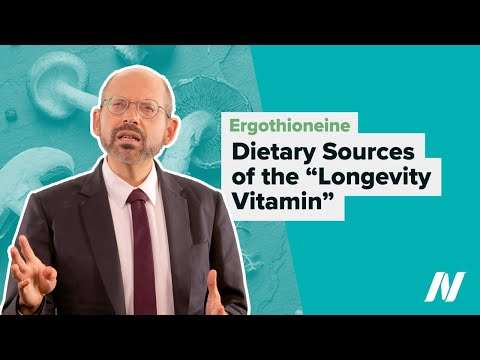
NutritionFacts.org — Dietary sources of the "longevity vitamin" ergothioneine
Sources
Scientific references
- U.S. Department of Agriculture. Mushrooms, oyster, raw (FDC ID 168580). FoodData Central. fdc.nal.usda.gov/food-details/168580
- U.S. Department of Agriculture. Mushrooms, white, raw (FDC ID 169251). FoodData Central. fdc.nal.usda.gov/food-details/169251
- Feeney MJ, et al. (2014). Mushrooms and Health Summit Proceedings. Journal of Nutrition, 144(7):1128S. PubMed 24812070
- Valverde ME, Hernández-Pérez T, Paredes-López O. (2015). Edible Mushrooms: Improving Human Health and Promoting Quality Life. International Journal of Microbiology, 376387. doi:10.1155/2015/376387
- Cardwell G, Bornman JF, James AP, Black LJ. (2018). A Review of Mushrooms as a Potential Source of Dietary Vitamin D. Nutrients, 10(10):1498. mdpi.com/2072-6643/10/10/1498
- Kalaras MD, Richie JP, Calcagnotto A, Beelman RB. (2017). Mushrooms: A rich source of the antioxidants ergothioneine and glutathione. Food Chemistry, 233:429–433. Summary: Penn State News
- Pleurotus Mushrooms in Nutrition and Health: Clinical and Preclinical Insights for Nutraceutical Development (2025). PubMed Central PMC12406294
- Fulgoni VL, Agarwal S. (2021). Nutritional impact of adding a serving of mushrooms on usual intakes and nutrient adequacy using National Health and Nutrition Examination Survey 2011–2016 data. Food Science & Nutrition. doi:10.1002/fsn3.2120
- Harvard T.H. Chan School of Public Health. The Nutrition Source — Mushrooms. nutritionsource.hsph.harvard.edu
Food comparisons use USDA FoodData Central values for raw banana (358 mg potassium per 100 g; medium banana ≈ 118 g), whole milk (≈0.17 mg vitamin B2 per 100 ml), raw apple (≈2.4 g fibre per 100 g) and cooked white rice (≈130 kcal per 100 g).